Every day, women across Canada face a health care system that often dismisses their symptoms, leading to years of unanswered questions and misdiagnoses. Despite making up half of the population, women’s health issues remain under-researched and underfunded, costing the economy billions. One striking example is lipedema, a painful condition affecting one in nine women, yet awareness is alarmingly low. When women’s health is neglected, the ripple effects impact families, workplaces, and communities. Discover how investing in women’s health can lead to profound benefits for everyone. Read on to learn more about this critical issue.

Every day, women across Canada walk into doctors’ offices with symptoms that are dismissed, minimized, or misunderstood.
Many will wait years for answers. Some will wait decades.
This isn’t an isolated problem; it reflects a long-standing gap in how health systems research, diagnose, and treat women.
Despite living longer than men, women spend more of their lives in poor health. Research from the McKinsey Health Institute shows Canadian women spend 25% more of their lives living with illness or disability than men. That gap affects millions of women, and its consequences reach far beyond the individual patient.
This year’s International Women’s Day theme, “Give to Gain,” highlights a simple truth: when we invest in women, everyone benefits. Nowhere is that clearer than in health care.
The Cost of Overlooking Women’s Health
Women make up roughly half of Canada’s population and workforce, yet the conditions that affect them remain disproportionately under-researched and underfunded.
The economic implications are significant. In Canada alone, closing the women’s health gap could generate over $27 billion in additional economic growth annually by 2040.
Yet medical research and clinical training have historically focused on male bodies and male experiences. Women were routinely excluded from clinical trials until the 1990s, and the effects of that legacy are still felt today.
The result is a system where women’s conditions are frequently misunderstood and diagnoses often come far too late.
Lipedema: A Case Study in Women’s Health Inequality
One example of this gap can be seen in Lipedema.
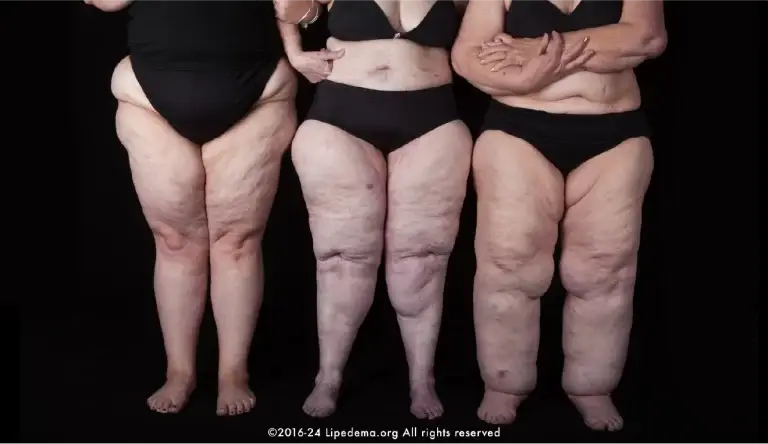
Lipedema is a chronic and painful fat distribution disorder that primarily affects women. It causes a symmetrical buildup of diseased fatty tissue, most often in the legs, hips, and arms, and is frequently accompanied by pain, swelling, easy bruising, and mobility challenges. It is estimated to affect as many as one in nine women worldwide, yet awareness of the condition remains remarkably low.
Many people living with lipedema spend years, sometimes decades, seeking answers. Too often they are told their symptoms are simply the result of weight gain or lifestyle choices. Others are treated for conditions they do not have while the disease continues to progress.
Even after diagnosis, treatment options can be difficult to access. Conservative therapies such as compression garments and manual lymphatic drainage can help manage symptoms, but they are often costly and inconsistently covered by insurance or public health systems.
At Lipedema Canada, we hear these stories every day.
They are stories of women living with chronic pain while trying to raise families, maintain careers, and navigate a health system that has yet to fully recognize their condition.
The Ripple Effect of Women’s Health
When women’s health is neglected, the consequences ripple outward.
Women continue to shoulder a disproportionate share of caregiving responsibilities, supporting children, aging parents, and family members with chronic illness or disability. When their health suffers, families feel the impact.
Workplaces feel it too. Women represent nearly half of Canada’s workforce, and untreated health conditions can lead to reduced productivity, lost income, and early retirement.
Communities also feel it. Women are leaders, volunteers, and caregivers who help sustain the social fabric of society. When women thrive, communities thrive.
Give to Gain
Closing the women’s health gap will require meaningful investment.
We need more research into conditions that disproportionately affect women.
We need stronger medical education and training so that women’s symptoms are recognized sooner.
And we need equitable access to treatment, ensuring that effective care is not out of reach for the people who need it.
The gains would be profound.
Women would spend fewer years living with pain and disability. Families would experience greater stability and well-being. Workplaces would benefit from healthier, more productive employees. And health systems would reduce long-term costs by treating conditions earlier and more effectively.
Simply put: when we give women better health care, everyone gains.
#IWD2026 #GiveToGain