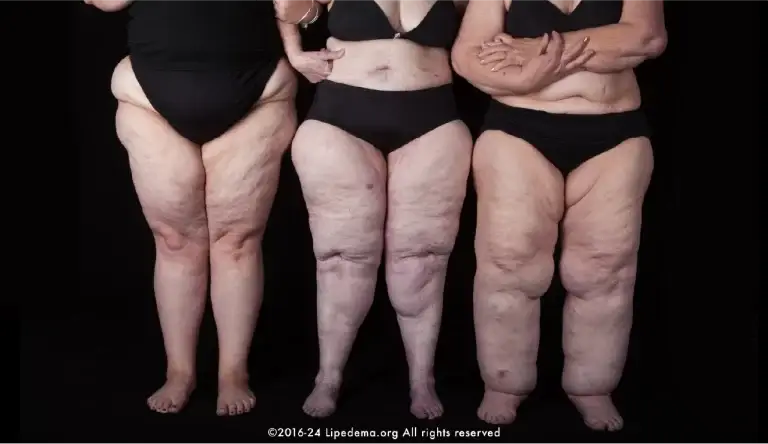
Canada is failing millions living with lipedema, a painful condition characterized by abnormal fat accumulation, primarily affecting women. Despite affecting an estimated 2.2 million Canadians, lipedema remains unrecognized by the government, leaving patients without proper diagnosis or care. Other countries, like Germany, have taken significant steps to acknowledge and treat this condition, but Canada remains stagnant. A petition is now open, calling for formal recognition of lipedema as a medical condition. This is a crucial opportunity to break the silence and push for change. Discover how you can help make a difference and support those affected.

Healthcare begins with recognition. Before a condition can be diagnosed, treated, researched, or funded, it must first be acknowledged as real. For Canadians living with lipedema, that basic step has still not been taken. The consequences are profound.
Lipedema is a chronic, painful medical condition characterized by abnormal fat accumulation, most commonly in the legs and arms, along with swelling, tenderness, easy bruising, and mobility challenges. Estimates suggest that as many as 2.2 million Canadians may be living with lipedema, the vast majority of them women or people assigned female at birth. Yet despite its prevalence, lipedema remains unrecognized by Canadian governments, leaving patients navigating a healthcare system that is ill equipped to diagnose or support them.
This failure is not due to a lack of science.
Lipedema was first identified and described in the 1940s by physicians Edgar Allen and Edgar Hines, who documented it as a distinct disorder of abnormal fat distribution, separate from obesity and lymphedema. More than eighty years later, lipedema is supported by a substantial and growing international body of research examining its prevalence, biological mechanisms, progression, and treatment options, including multiple clinical reviews and consensus statements.
Other countries have acted on this evidence. Germany, for example, now formally recognizes lipedema and has approved public health insurance coverage for lipedema surgery for patients at all stages of the disease, following the results of a large scale, randomized clinical trial demonstrating its medical benefit. In July 2025, Germany’s Federal Joint Committee approved liposuction as a standard insured treatment for lipedema stages I through III. This marked a decisive shift from hesitation to evidence based.
Canada, by contrast, remains stuck at the starting line.
Ask why lipedema remains unrecognized here, and the answer depends on which level of government you ask. The federal government points to provincial responsibility for healthcare delivery. Provinces, in turn, ask whether the federal government or other provinces have already taken the lead. Each waits for the other to act first.
This pass-the-buck mentality has produced a policy stalemate. While governments debate jurisdiction, Canadians with lipedema are left waiting, often for years, without diagnosis, access to care, or clear clinical pathways. In practice, the system’s failure to recognize lipedema means the condition effectively does not exist within healthcare planning.
The consequences are predictable. Lipedema is not taught in Canadian medical schools, and many healthcare providers receive no training on how to identify it. Patients are frequently misdiagnosed with obesity or told that diet and exercise should resolve symptoms that are unrelated to lifestyle. These delays matter. Lipedema is progressive, and without early identification and management, pain and mobility limitations often worsen over time.
International estimates suggest lipedema affects up to one in nine women, yet in Canada it remains poorly integrated into diagnostic frameworks. This gap is reinforced by the fact that Canada does not currently use the World Health Organization’s ICD‑11 diagnostic code for lipedema, meaning the condition cannot be consistently coded, tracked, or counted within health system data. Without a diagnostic code in use, policymakers lack reliable information on how many Canadians are affected, making effective planning, research, and service delivery far more difficult.
Recognition also determines access to care. Treatments and supports are often contingent on whether a condition is formally recognized as medically necessary. Without that status, Canadians with lipedema face barriers to referrals, coverage, and services such as compression therapy, physiotherapy, and pain management. Some patients pursue treatment outside Canada at enormous personal cost, underscoring how recognition gaps translate directly into healthcare and financial inequities.
There is now a narrow opportunity to break this deadlock. Manitoba MP Leah Gazan has supported the posting of Petition e‑7244, currently open on the House of Commons of Canada website. It calls on the Government of Canada to formally recognize lipedema as a medical condition. Under parliamentary rules, an electronic petition must collect at least 500 valid signatures within a 120-day window to be certified and presented in Parliament. If that threshold is reached, the petition is tabled in the House of Commons and the federal government is required to issue a written response. If it is not, the petition expires, allowing the cycle of deferral to continue.
Five hundred signatures may sound modest, but for conditions like lipedema, long excluded from policy and practice, reaching that threshold is transformative. It moves lipedema from advocacy into the official parliamentary record and forces a public response where silence has prevailed.
Healthcare systems cannot treat what they refuse to recognize. For the millions of Canadians living with lipedema, recognition is not the end goal. It is the indispensable first step. The science exists. Other countries have acted. The only question left is whether Canada will continue to look away. Make your voice heard and sign the petition now.